• Economics of Pleasure

    Marginal Propensity to Consume

    Have you ever been hot on a summer day and extremely thirsty? So get your self a glass of water. The first gulp of water is the most pleasurable. Each glass of water has diminishing pleasure after a warm day.

    This is called the Marginal Propensity to Consume. After a certain point, pleasure from consuming decreases at a small rate or Diminishing Returns . Playing video games is another example. They are fun until you beat the game, then playing each time decreases utility. Utility is the economic term for pleasure, and utility decreases as we do things more.

  • Economics of Experience

    Training

    According to recruiters, retail management and restaurants do not count as experience for corporate jobs even with advanced degrees. So executives I challenge you not to go to stores or restaurants then. So remember next time you reject an applicant with retail or restaurants on there resume, ask yourself, what did you do before you got your senior level job; probably, restaurants or retail.

  • Economics of Sarbanes-Oxley

    Two Books

    So to begin any business blog, we must talk about Enron. Enron executives were clever. Essentially they kept two books a real book and a fake book. Every quarter they published the fake book, until someone at headquarters got mixed up and posted the real book.

    Enron went from AAA rating to junk rating or CCC or lower overnight. To make matters worse, they invested all or their employee pensions in Enron stock. This action destroyed thousands of lives. In fact CEO Ken Lay had a heart attack before he had to report to federal prison.

    Today all companies are required under the Sarbanes-Oxley Act to have an independent accounting firm to audit their books. The act protects investors, the Government, and employees. Enron sure “cooked the books” in the early 2000s.

  • Economic cost of Restructuring

    Layoffs

    Every one layoff, if workers make 40,000 to 75,000 of disposable income, is now taken out of the economy. This always causes a cascading effect, because one layoff leads to another layoff; which could lead to a recession.

    Disposable income equals the income available to spend after taxes. So layoff or firings lead to a negative returns to scale in the Macro Economic economy. So in my image if the geese represents 2 workers that now have less money to spend on their family with a layoff. See image below of the results of layoffs. Less money for the goslings chicklets.

  • Economics of Recalls

    Recall

    If you are having a massive number of recalls; you are not following Total Quality Management. Total Quality Management (TQM) allows workers to stop the assembly line when a defect is found, so a correction can be made.TQM wants no more than 1 defect per 1,000,000 units.

    Recalls cost billions of dollars. Have you ever heard grandpa say, “It takes just as much time to do it right the first time.” Companies need to follow this policy.

    Effects of recalls: Consumer deaths, National Highway Safety Board litigation, loss of brand trust, customer time, etc.

    I have to include a picture of a ford vehicle. Ford seems to lead the auto industry in Recalls.

  • Economics of Market Cap

    Market capitalization or Total Enterprise value is the price per share * share outstanding. This is the worth of a corporation. For example corporation x has 2 shares outstanding and the price per share is 2; so 2*2=4. The corporation is worth 4 dollars.

    Market Cap represents the total value of a corporation. The formula for market cap is shares outstanding x the price per share. Currently Ford Motor company’s market cap is 42 Billion. Apple’s market Cap is 3 Trillion dollars.

  • Economics of Warranty

    Support

    To promote warranty Apple should end planned obsolescence. An iPhone 4 should still be supported by the company. If the national highway safety board says their is a recall on a 15 year old mustang Ford must comply, and fix it. Lets end waste and destruction of the planet by holding Cell Phone companies accountable for not supporting their products.

  • Economics of The Dow Jones Industrial Average

    INDU & S&P 500

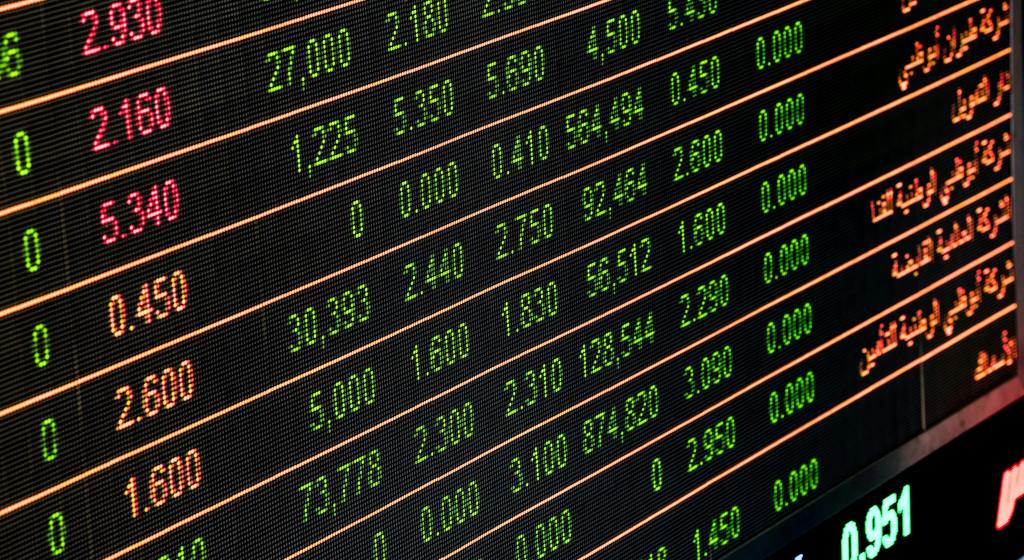
    The Dow Jones Industrial Average tells how the US economy is doing as a whole, It is compiled using Market leaders in every sector. The Dow is made up of 30 stocks.

    The Dow along with The S&P 500 help determine the US economic strength. The Standards and Poor 500 represents the 500 largest companies in the United States.

  • Economics Basics

    The Factors of Production are land, labor, capital, human capital, and entrepreneurship.

    In the short run, usually less than a year, capital is fixed; so to increase output we can only hire more workers. In the long run, a time greater than one year, we can reduce human workers and automate systems. However economists cannot agree on what time period constitutes the long run (2,4,7 years). An old economics jokes states in the long run we are all dead.

    The more workers we hire out put increases until the point of diminishing marginal returns to scale. Ie workers get in each others way and out put decreases. Economics is the science of delicate balances.

  • Economic Marketing of The Money Back Guarantee

    The Money Back Guarantee promotes customer satisfaction.

    It promotes 100% customer satisfaction or your money back in 30,60, or 90 days. If your product is solid, with only one defect per million this could be a good strategy; and it could provide you with a competitive advantage.

    If a recall is issued by the National Highway Safety board it will bankrupt you in this strategic operation. However; automobiles do not follow this strategy, because vehicles are such a costly purchase.

    As an example Mike Lindell follows this strategy at my pillow. He has little to worry about because his products are pretty solid. He uses a 30 day money back guarantee. We will talk about warranties in the next blog.