A callable bond is a bond with provision that allows it to be reissued at a lower interest rate in the future. A high interest rate bond with a callable provision can be called and reissued at a lower internet rate. Many junk bonds use this provision when their bond rating improves and the bond can be reissued at a lower interest rate. Macy’s recently called a bond to lower their interest rate obligations. The transaction with Macy,s will complete on August 28.
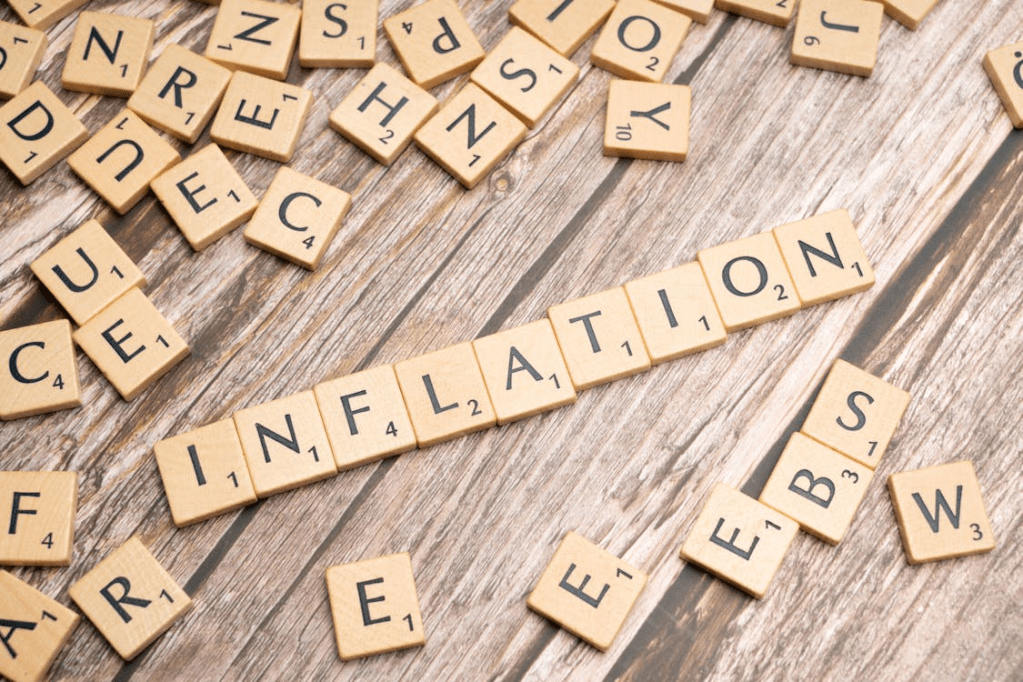
The Consumer Price Index is a market basket of all goods and services in the US economy. The base year is 1983. It is important to note that some items in the CPI measurement such as food and beverage can go up and other items such as fuel can go down; yet CPI can increase. For example we might have deflation in gasoline, however, cereal, beverages, and housing could increase at a faster level. In this example CPI would increase over the measured period and inflation would rise. The key take away is that some goods increase and some goods decrease in price, but every year overall prices rise 2 to 3 percent. Finally, some goods always decrease in price over time. Some examples are laptops and flat screen TVs. Also CPI is not always a good measure of price level. For example, apartment rents will always be higher in New York, New York than they will be in Memphis, TN. Many people will argue that workers are paid more in New York City than somewhere like Memphis, TN to compensate for higher price levels. However, I would guess that the average worker would have a higher standard of living in Tennessee than New York. We will speak more on wages in upcoming posts.
Systemic risk is also known as market risk, and can’t be reduced through diversification in a portfolio. An example of market risk would be the United States putting a major tariff on a country like China. This would cause almost every stock to go down, so diversification will not help in this case.
Unsystematic risk can be reduced through diversification. A diverse portfolio will usually contain 30 stocks. When an investor obtains at least 30 stocks, with the same dollar amount invested in each stock; non-market risk is eliminated. In this scenario, even if one company goes bankrupt, the entire portfolio will not be lost. Just remember, do not put all your eggs in one basket.
You may also want to consider investing in corporate bonds or treasury securities as a further way to diversify a portfolio.
War bonds were the way the United States funded most major wars. The war bond was first used during the Revolutionary War to fund the Continental Army’s fight against Great Britain. These bonds were also largely used to fund the US’s war effort against Nazi Germany, and Japan in WWII.
War bonds work on two key principles: one they are sold at a discount and they provide no coupons.
When a bond is sold at a discount the consumer purchases the bond at a value less than face value. Upon maturity full face value is paid to the consumer. For example, the War bond might be purchased for $85.00, and in 10 years it will pay the investor $100.00. In WWII the bonds were purchased for $18.50 and maturated at $25.00.
Zero coupon means that on a 1, 5, 10, 20, and 30 year bond no annual interest is payed on the bond. To compensate for this principle, the bonds are sold at a discount below face value. In the modern world, zero coupon bonds are less attractive to investors because they do not generate steady income streams each year.
Currently the US has discontinued war bonds; however if the nation ever went to a conventional war with Russia or China, war bonds would be needed to help finance military operations. I can see a future where these bonds will be needed again, but let us hope and pray this never is the case.
Happy Independence Day America, and remember the importance of the War bond to our Independence.
The governments of the world have two ways to raise capital to finance their nations: one is through taxation, and the second is through the issue of government bonds.
In the United States we use a bond called a Treasury Security. There are three types of Treasury Securities.
Treasury Bills
Treasury Notes
Treasury Bonds
Treasury Notes are short term Bonds with usually less than a year to maturity. They pay very little interest because they mature so quickly.
Treasury Notes are usually longer than a year to 10 years in duration. Interest rates vary on the notes, but they usually get a better interest rate the longer their duration.
Treasury Bonds duration are between 10 and 30 years. In normal economic times they pay the highest levels of interest.
As a quick note interest expenses on bonds can be expensive on a national government. In the case of a 30 year bond paying a 10 percent interest rate on a $1000 principle, the national government has to pay $100 per year on the bond to the investor. The total interest expense over the life of the bond would be $3000 plus $1000 repayment of the principle at year 30. You can see from the example that if a federal government issues large number of bonds, that interest expense can grow exponentially. According to fiscaldata.treasury.gov, The US will spend 776 Billion on Treasury security interest in 2025. This is a serious fiscal problem in the United States.
Most Americans do not truly understand how income is generated from the purchasing of stocks. There are two ways to make money from stocks, Through capital gains or when the stock price increases, and from dividends.
For example: Suppose I buy company X for $1.00 per share and it increases to $10.00 per share. I have just made 9.00 per share. But wait, say company X pays $2.00 per share in dividends per year. I have just actually made $8.00 in capital gains plus $2.00 per share in dividends. My yearly profit would be $11.00 per share. Some people only invest in a stock for dividend return. They usually look for Real Estate Investment Trusts or (REITS). REIT can have a dividend yield of up to 18% per year.
There are also three type of investors. Financial advisors must determine the type of investor they are working with in order to find the best investment strategy. The three type of investors are Risk Adverse, Risk Loving, and Risk Neutral.
Risk Adverse investors can’t stand to lose any money on investments. They would most likely be upset if they lost a small amount of money on an investment. Their best investment would be a Utility Stock or a Treasury Security.
Risk neutral investors do not worry about gaining or loosing money. They will take more risk than risk adverse investors
Risk Loving investors are aggressive, they will usually seek investments with high returns but have a higher default risk. They are similar to venture capitalists and are willing to accept highly uncertain investments that will show a potential for returns. They usually like Initial Public Offerings of newly listed stocks, or potentially pink sheet stocks with high gain potential but equally high bankruptcy risk. An example of a stock a risk loving investor might seek out would be XROX or AMC. These are two penny stocks with high risk but could have great return potential.
Truthfully a stock purchase is determined by the investor. Some people buy stocks because they like the company. Others buy stock because of the numbers, and finally some just buy stock for the dividend return.
To monetize the debt, a nations Central Bank purchases treasury securities on the open market. This creates invisible money, because the Nation is essentially borrowing money from itself. From an economics point of view, the nation is creating money from nothing. The United States has been following this practice for years. The nation has not had a balanced budget in 25 years, and each year the country spends more money than it takes in taxes and revenue.
Open market operations are complex on the Macro Economic scale, but in the United States all interest rates are controlled by the Federal Reserve performing Open Market Operations.
An open market purchase is when the Fed buys bonds on the open market. Money is then injected into the economy and interest rates fall. This policy was practiced from the late 2000’s till around the early 2020’s. The US economy was so weak that the Fed was forced to keep interest rates at a target rate of .0 – .25%.
The current Federal Reserve Chair Jerome Powell took a different approach in order to fight inflation. He rapidly implemented the open market operation known as an Open Market Sale. In this strategy, the Fed sells bonds on the open market, therefore taking cash out of the market, and raising interest rates. This will reduce inflation by cutting consumer spending; however reduced consumer spending can lead to a recession. The current Federal Funds Rate Target is 4.25-4.5%.
Interest rates are quite complex, and the Fed has difficult decisions to make. The central banks objective is to keep year over year inflation at around 2.5-3% and to keep Unemployment low. Sometimes it is difficult to achieve both goals, but how to achieve these goals are highly debated in the business world.
A corporation is a legal entity. A corporation is owned by its shareholders who cannot be sued for what the corporation does. In a dispute the corporation is sued.
The corporation answers to shareholders once a year at the annual meeting. The shareholders appoint the board of directors. The board of directors hire managers that run the corporation.
Managers sometimes serve their own interests that is not always good for the shareholders. This is called the agency problem.
The board can authorize bonuses to overcome the agency problem. This helps to drive profits for managers and the shareholders.
A corporation pays taxes on earnings, and then pays dividends to shareholders from those earnings. Dividends, or earnings are taxed again in the shareholders own federal taxes. This is called double taxation.
The shareholders earn return on their investments through capital gains on the stock and through dividend payments.
The true objective of business is to make a profit in the form of retained earnings. Retained earnings are reinvested in the corporation.
So the Executive team’s goal is to increase the stock price and increase earnings.
Stakeholder theory will be discussed in the next blog.
A dollar today is worth more than a dollar in the future. This is why we have something called interest. If you invest 100 dollars today and are promised 5% interest in the future or in one year; the value is 105 dollars. This might sound great but what if the inflation rate was 6% in one year. Your real interest rate would be 5%-6%=-1% interest. Some would say that you could spend the 100 dollars today, and in this circumstance this might be best. There is a formula for future value with simple interest: Future Value= Present Value(1+interest)raised to time in years. This is just a basic way to see the time value of money. Money becomes less valuable in the future unless the interest is high enough to overcome the inflation rate.
Instead of complaining on LinkedIn about our jobs, we should be focusing on the customer. How can we wow the customer? You can wow the customer in any industry. In a phone center, you can connect the customer directly to the right department. In retail you can check the back stock while the customer waits.
World Class Customer service is a business term that means going above and beyond for the customer. Anything can be deemed World Class, and its a “yes we can mentality”. Customer can you call another of your stores and have an item put on hold? Yes sir I can. Just think today about things that wowed you as a customer, and try to practice it in your business.